Decoding Verification Timelines for Payout Processing Across Regional Bingo Platforms
Rosa Fischer · Aug 24, 2026
Decoding Verification Timelines for Payout Processing Across Regional Bingo Platforms
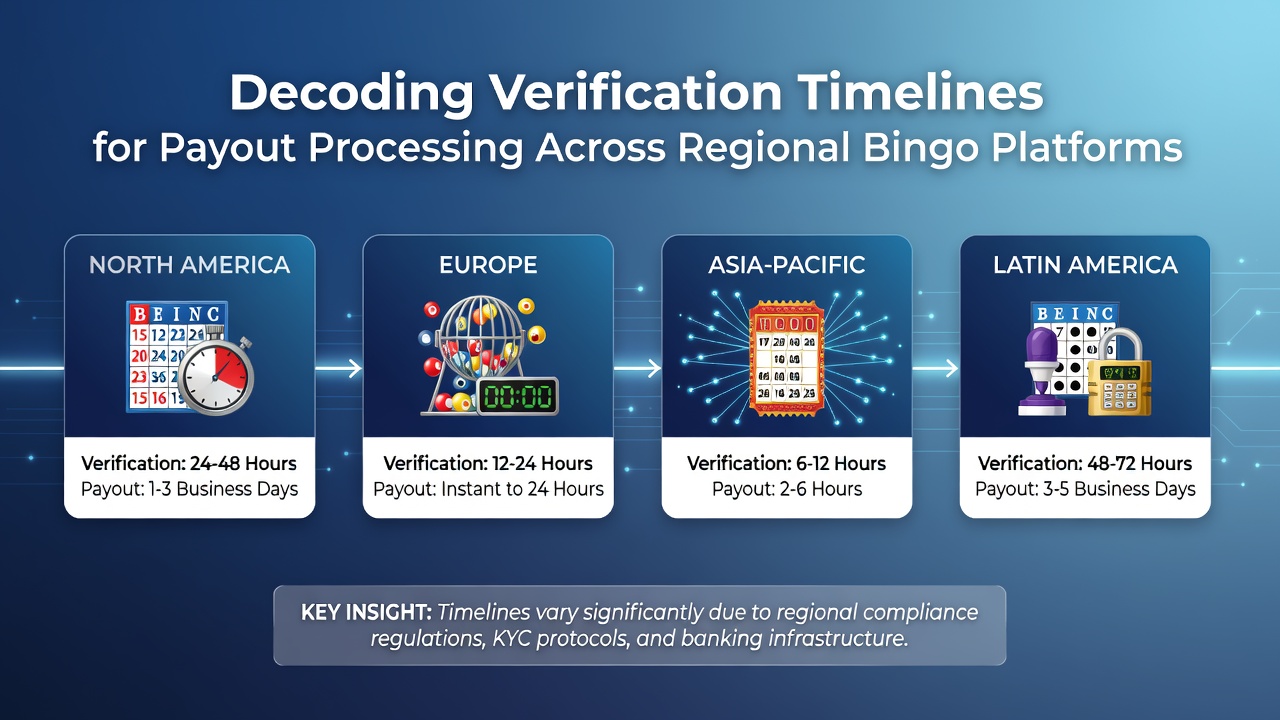
Verification timelines for payout processing in bingo platforms vary significantly depending on the regulatory framework in each region, and those differences shape how quickly players receive funds after a win. Platforms must navigate identity checks, anti-money laundering requirements, and banking integrations that differ from one jurisdiction to another, which directly influences the overall duration from request to completion.
North American Processing Patterns
Canadian regulators such as the Alcohol and Gaming Commission of Ontario require platforms to complete enhanced due diligence before releasing larger payouts, and this process often extends verification to 48 hours when documents require manual review. Data from provincial oversight bodies indicates that standard identity confirmation finishes within 24 hours in most cases, yet cross-border transactions introduce additional delays because operators must reconcile payment rails with both federal and provincial rules. Observers note that platforms operating in multiple provinces coordinate these checks through centralized systems, which reduces duplication while still satisfying each local standard.
In contrast, several U.S. states maintain shorter windows for smaller withdrawals because they rely on state-licensed payment processors already integrated with tribal or commercial gaming systems. Those who've tracked monthly reports from state gaming agencies find that verification rarely exceeds one business day when players use pre-approved banking methods, although jackpot-level sums trigger secondary reviews that can stretch timelines to three or four days.
European and Asia-Pacific Variations
European markets enforce strict customer due diligence under anti-money laundering directives, and this leads to verification periods that frequently run between 72 and 96 hours when source-of-funds documentation must be examined. Platforms serving multiple EU countries often batch these reviews through regional compliance teams, which creates consistent but sometimes slower processing compared with North American counterparts. Research from academic studies on digital gaming compliance shows that automated document verification tools have shortened average times by roughly 30 percent since 2023, yet manual exceptions continue to lengthen the tail of the distribution.
Across Australia and parts of Southeast Asia, timelines reflect a hybrid approach where national identity services feed directly into platform databases, allowing many verifications to complete within a single day. Yet operators must still accommodate state-level restrictions on payment methods, and this occasionally adds an extra 24 hours while funds clear through approved channels. In August 2026, several Australian platforms reported implementing updated real-time verification APIs that further compressed standard payout windows for verified accounts.
Factors That Extend or Shorten Timelines
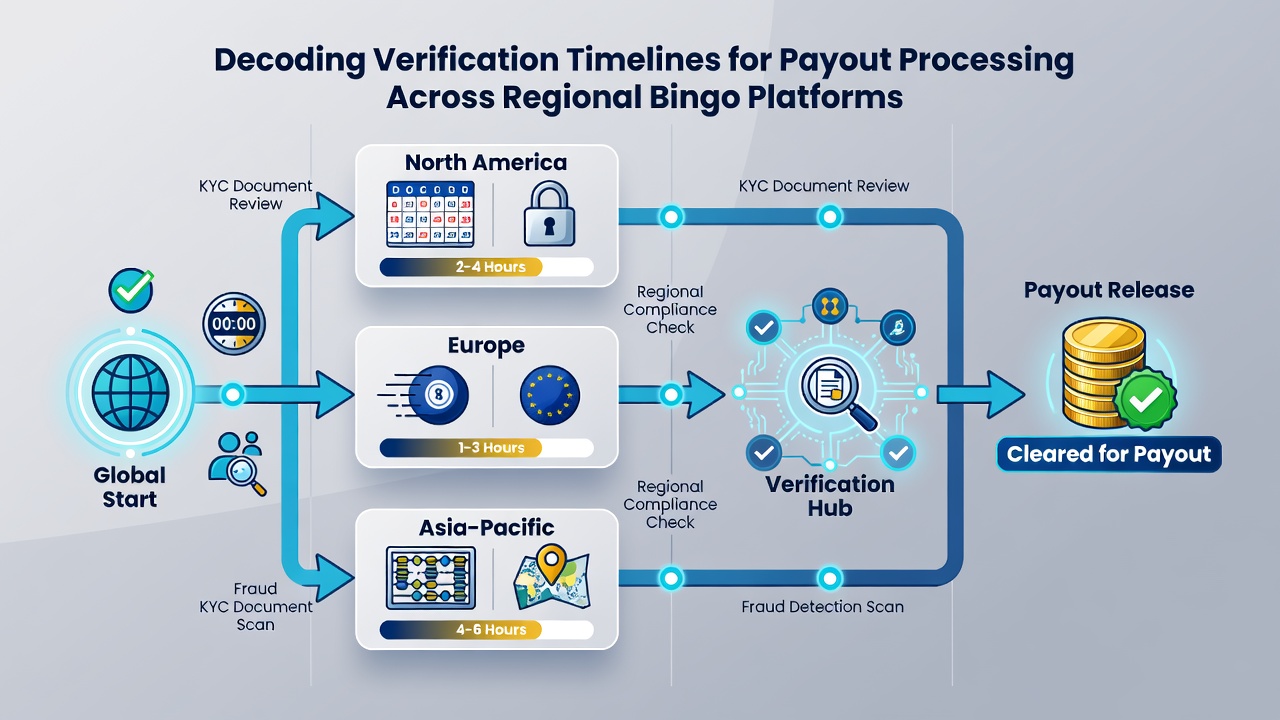
Payment method choice stands out as one of the strongest predictors of speed, because e-wallets and prepaid options clear faster than bank transfers in nearly every region. Those who've examined operator dashboards note that players selecting instant withdrawal tools experience verification that finishes in under 12 hours once initial identity checks pass, whereas traditional bank wires introduce settlement delays that compound with regulatory holds. Platform volume also matters: high-traffic sites often prioritize automated flagging systems that route straightforward cases quickly while routing complex ones to human reviewers, creating a bimodal distribution of completion times.
Seasonal spikes around major tournaments or jackpot rollovers can stretch resources, and data indicates verification queues lengthen by 20 to 40 percent during those periods. Operators mitigate this through predictive staffing models and pre-verification incentives that encourage players to complete checks during off-peak windows. Cross-regional play adds another layer because platforms must satisfy the strictest applicable rules when a single account accesses multiple markets, which sometimes forces longer holds even for routine requests.
Regulatory Updates and Platform Adaptations
Regulators continue to refine guidelines around digital identity, and platforms respond by integrating newer verification technologies such as biometric matching and blockchain-based credential checks. A 2025 industry report from the Responsible Gambling Council highlighted that operators adopting these tools saw measurable reductions in average payout processing times across Canadian and Australian jurisdictions. The same report noted that smaller platforms without in-house compliance teams sometimes outsource verification to specialized providers, which can either accelerate or delay timelines depending on the provider's workload.
What's interesting is how August 2026 updates in several Asia-Pacific markets aligned verification standards more closely with European models, prompting some operators to lengthen their published timelines as a buffer while they adjusted internal workflows. Those adjustments included expanded document libraries and multilingual support teams, which ultimately stabilized processing speeds after an initial adjustment period.
Conclusion
Verification timelines for bingo payouts reflect the intersection of local regulations, payment infrastructure, and platform capabilities, and these elements combine differently across regions. Platforms that align their systems with evolving identity standards continue to narrow the gap between request and completion, while players who prepare documentation in advance encounter fewer interruptions. The patterns observed in 2026 suggest that further integration of automated tools will keep shaping these timelines, yet regional differences will remain a defining feature of payout processing for the foreseeable future.